Breed
Safi
الصافي
الصوافة

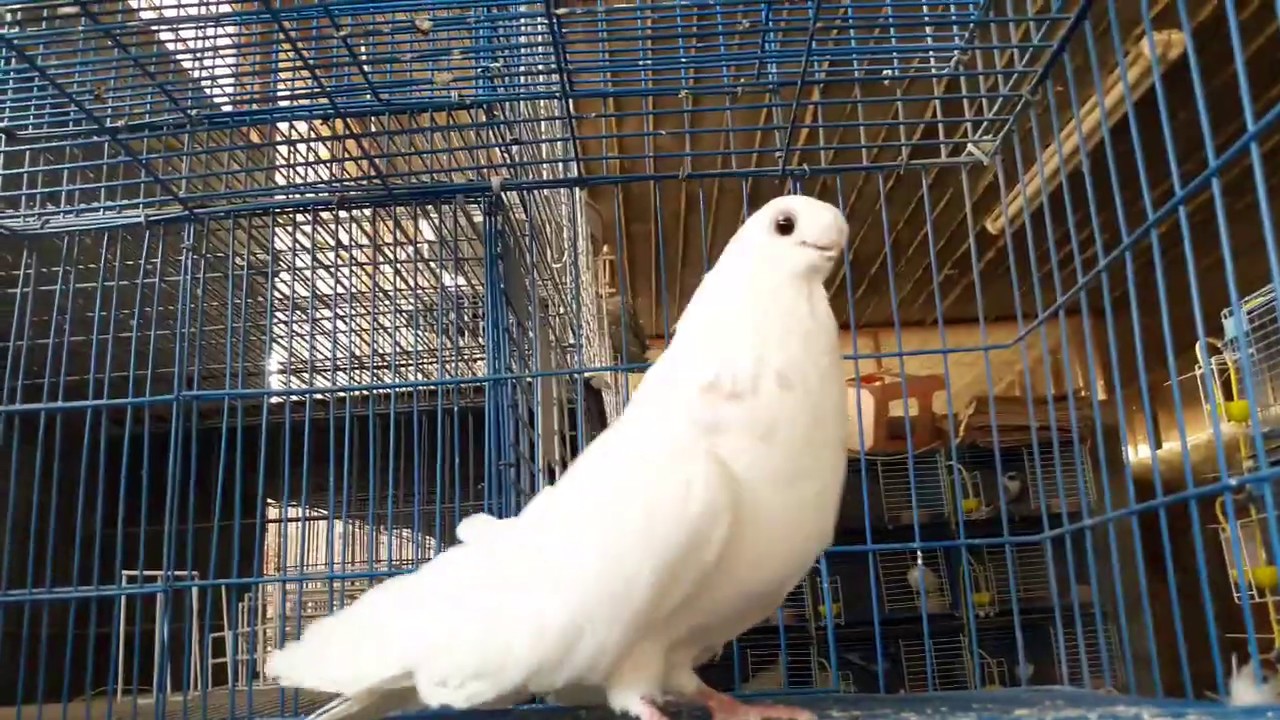
The Safi house — the finest, most beautiful and most highly valued of the Egyptian Ghuzar pigeons, and the most distinctive. By beak (bone) structure the Safi divides into three grades — Safi Qate' (virtually beakless, roughly 1 mm, with a pronounced clamp into the face), Safi (marginally longer, by millimetres), and Safi Ada (slightly longer again with less clamp and a finer, more pointed tip). All three share every other standard. The head must be small and perfectly round front and back with no ridges or flattening; the beak must read as part of the head, as short as possible, blunt and broad; the eyelid is very thin and usually white; the eye is round, wide and slightly open, with the Iraqi iris in its various shades as the basis for all Safi strains. Body length averages 35 cm — longer is better — with small, short, smooth legs. Optional refinements that add value but whose absence is not a fault: the arched neck (arqaba), the throat wattle (laghd), the tongue socket (shakima) and the tongue-swallowing motion.
References
معلومات من كبار مربي الحمام الغزار والمصري وما توفر من المراجع
Sub-breeds

Foundation Colour Strains
الأتياب الأساسية
Safi Sho'la
الصافي الشعلة
Grey Neck-Band Group (Sini)
الدبور الرصاصي (الصيني)

Green Neck-Band Group
الدبور الأخضر
Yellow Neck-Band Group (Sokkari)
الدبور الأصفر (السكري)

Kashmiri Group
الكشميري
Sheesh Group
الشيش
Non-Foundation (Mixed) Colours
الألوان غير الأساسية (المختلطة)
More from this category




Related articles

Base pigeon colours: blue, ash-red, black and how they are inherited
However many pigeon colours there seem to be, they all come back to three base pigments and two genes that modify them. Understand those three and most colour surprises in the loft explain themselves.
15 September 2026Patterns and markings: bar, checker, ablaq and masood in Egyptian fancier terms
Colour is one thing and pattern is another. The wing is patterned in four grades, and colour is distributed over the body in patterns whose Egyptian names are decades old.
15 September 2026Planned pairing: how to plan a pair for the colour you want
Genetics is not luck once you keep records. With four rules and a simple table you can predict the squabs' colours before the eggs hatch — and know when to break the rules.
15 September 2026